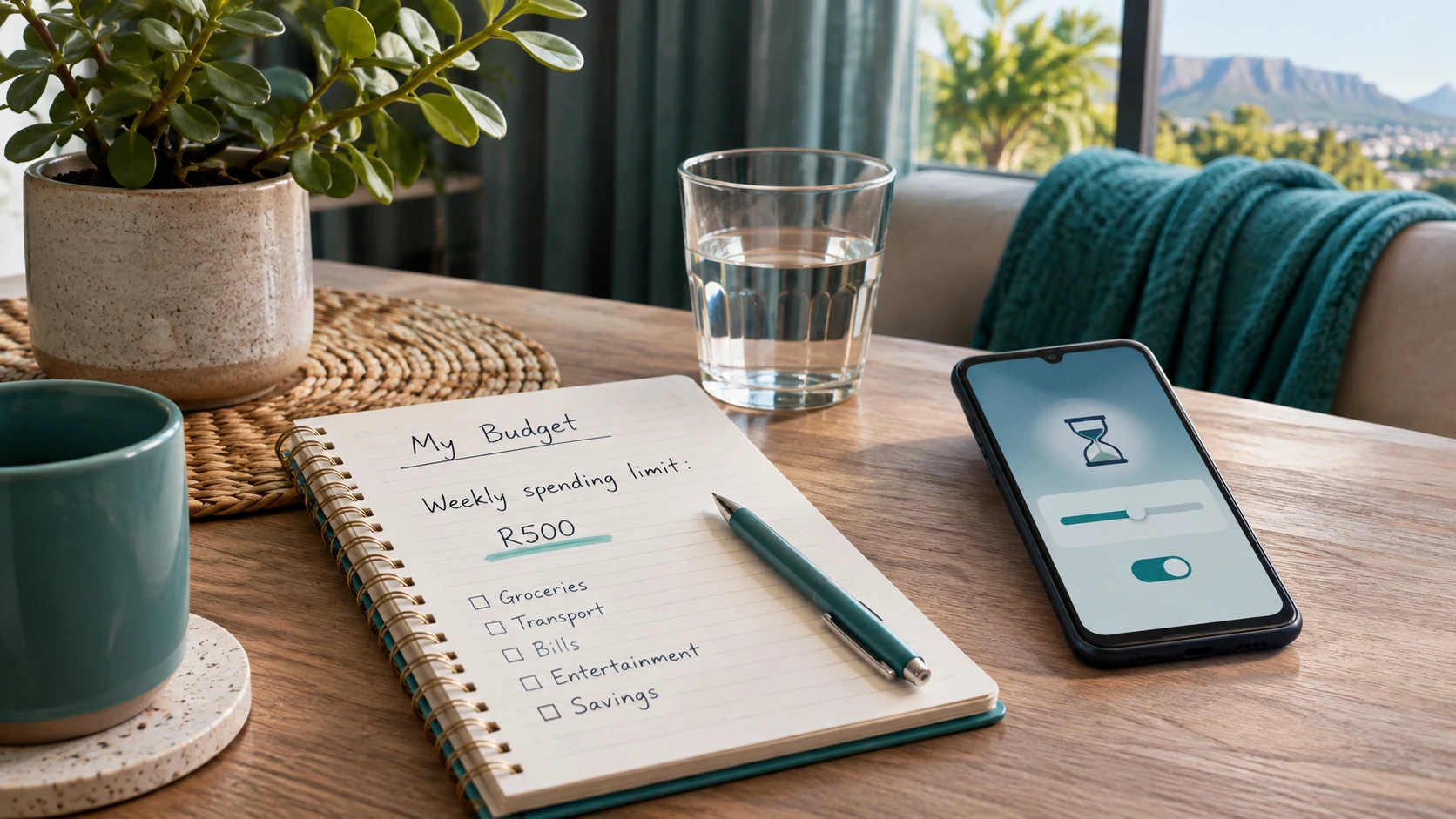
Responsible gambling means setting limits on betting before any money changes hands, and being able to stop when those limits are reached. Money for rent, food, transport or debt repayments should never be part of a gambling budget. A licensed bookmaker may offer safeguards, but a licence does not remove the risk of harm.
Free, confidential help is available to South Africans who gamble and to affected family members. The National Responsible Gambling Programme (NRGP) offers 24-hour toll-free counselling on 0800 006 008 and WhatsApp support on 076 675 0710. The South African Responsible Gambling Foundation (SARGF) runs the programme.
What does responsible gambling mean?
A bet is a leisure expense with an uncertain outcome, not a source of income. Decide how much you can afford to lose after paying for groceries, electricity, school fees and other essentials. Put a time limit on betting as well. Small stakes placed repeatedly over an afternoon can add up to more than a single large bet.
The clearest test is what happens after a loss. Can you leave it there, or do you feel compelled to recover it - Are you keeping to the money and time limits you chose - Gambling-related harm can start well before someone meets the clinical criteria for gambling disorder.
SARGF uses a gambling continuum that runs from non-gambling and recreational gambling through at-risk and problem gambling to disordered gambling. People do not inevitably move from one stage to the next. Watch for a change in behaviour: larger stakes, betting more often, hiding transactions or repeatedly trying and failing to stop.
Why losses can become difficult to control
Odds express the price of an uncertain outcome. Bookmakers build a margin into their prices, so a few well-informed picks do not turn betting into a dependable income stream. Team form, injuries and last-minute results can overturn even a carefully considered wager. No staking system guarantees that earlier losses can be won back.
Chasing losses changes the reason for betting. Someone who started with a set entertainment budget begins depositing more to get back yesterday's money. Winning can prolong the cycle too: winnings are treated as spare cash, then staked again until they disappear.
Live betting and fast in-play markets leave little room between an impulse and the next wager. Push notifications and saved payment details make another deposit easy. Holding several accounts hides the combined spend, while bonuses and free bets may require further wagering under their terms. Time spent tracking odds and results is part of the cost as well.
With random number generators (RNGs), a run of losses does not make a win “due”. That misconception is common in slot-machine and casino games. Understanding how random outcomes work does not make unlicensed online casinos legal in South Africa.
Practical limits that reduce gambling exposure
Set spending limits before logging in, using only money left after essentials. Betway, Sportingbet, Sunbet and Supabets publish responsible gambling information, though the controls they offer and the rules for changing them vary by operator.
| Control | What it restricts | What to check |
|---|---|---|
| Deposit limit | Money added to an account per day, week or month | Whether it covers every payment method and when an increase takes effect |
| Loss or spend limit | Net losses or wagering within a defined period, where offered | How the operator calculates losses, winnings and unsettled bets |
| Session limit or reality check | Time spent betting, or a reminder of elapsed play | Whether the alert merely notifies you or actually stops access |
| Time-out or cooling-off | Account access for a temporary period | Duration, early reopening rules and whether marketing messages stop |
| Self-exclusion | Gambling access for a longer formal period | Whether the restriction applies to one operator, a province or other covered venues |
A deposit limit is not a loss limit. Money already sitting in an account may still be wagered after new deposits are blocked. A reality-check message may only display the time spent playing; it may not log you out. And a restriction at one bookmaker does not automatically extend to others.
To see what betting actually costs, compare bank statements with transaction histories from every gambling account. Include deposits, withdrawals, current balances and unsettled bets rather than remembering only a big win. Turning off promotions, removing saved cards and keeping household money separate can make impulsive deposits less convenient.
A budget cannot restore control once you regularly override it. Borrowing for bets, gambling with bill money or repeatedly increasing a limit calls for a stronger response: stop gambling rather than set another reminder.
Time-out, account closure and self-exclusion are different
A time-out temporarily restricts access, sometimes for a day and sometimes for weeks, depending on the bookmaker. Check whether access resumes automatically. Closing an account is different: it may not stop someone from opening another one later. Neither should be confused with formal self-exclusion.
Formal self-exclusion creates a longer restriction. South African regulatory guidance describes a minimum six-month exclusion, with counselling support and a formal route to request reinstatement later. Six months is not an automatic reopening date.
How self-exclusion works in South Africa
- Ask the licensed operator or relevant provincial gambling board for its self-exclusion form and instructions.
- Confirm the start date, covered accounts or venues, and the body administering the restriction. Keep the written confirmation.
- The NRGP offers free counselling during exclusion, including help with urges to bet, relationships and debt.
- Ask what happens to money in the account, unsettled bets, marketing messages and any later attempt to log in.
- Ending an exclusion after the minimum period may require counselling evidence and formal review by the regulator. Reinstatement is not automatic.
The Gauteng Gambling Board (https://www.ggb.org.za/self-exclusion/) sets out its exclusion and revocation process. The Western Cape Gambling and Racing Board (WCGRB) has a provincial process too. Rules and coverage must be checked with the board responsible for the operator or venue.
Do not assume that “self-exclusion” blocks every bookmaker in the country. The NGB's 2024/25 annual report (https://www.ngb.org.za/wp-content/uploads/2026/02/National-Gambling-Board-Annual-report-24-25-30-August-2025.pdf) described the National Self-Exclusion Register as inoperative during that reporting period. That statement does not establish its present status. Request written confirmation of which accounts and venues your exclusion covers, then ask whether separate applications are needed elsewhere.
Signs that gambling is causing harm
The size of a loss tells only part of the story. A person with a high income may hide gambling from family or lose sleep over debts. Someone earning less may struggle to pay for transport after a smaller loss. Changes in behaviour, not a particular rand amount, are the warning signs.
- Financial: using grocery or transport money, falling behind on rent, taking short-term loans, selling possessions or hiding betting transactions.
- Behavioural: returning repeatedly to recover losses, increasing stakes, gambling at work, opening extra accounts or failing to keep promises to stop.
- Emotional: irritability when unable to bet, guilt, anxiety, poor sleep, stress or relying on gambling to escape difficult feelings.
- Social: secrecy, arguments over money, missed commitments, isolation or damaged trust with a partner, friend or family member.
A short self-check
Over the past few months, have you chased a loss, borrowed to bet or concealed transactions - Has gambling taken longer than you planned - Have attempts to stop failed, or have you continued after arguments and missed bills -
One “yes” is not a diagnosis. SARGF offers a self-screening tool (https://responsiblegambling.org.za/warning-signs/) informed by the Canadian Problem Gambling Index. A questionnaire can flag concern; a clinician makes a diagnosis.
What if gambling has already affected your finances?
Another bet will not settle an overdue account. Stop new deposits and write down what you owe, including payment dates and interest. Rent, food, transport and other essentials take priority over gambling losses.
- Protect essential money. Keep funds for household expenses out of betting accounts. Check recurring transfers and remove stored cards.
- List the debts. Record arrears, interest, payment dates and balances across accounts. An unsettled wager is not money available to pay bills.
- Cut off prompts. Disable odds alerts and promotional messages, uninstall betting apps and apply account restrictions.
- Get support. SARGF may offer financial-wellness, budgeting and debt guidance alongside gambling counselling.
Borrowing to chase losses can leave repayments long after the betting session ends. A suitably qualified South African debt counsellor or financial professional can explain options when repayments have become unmanageable. A new bet is not a repayment strategy.
Free gambling counselling and treatment in South Africa
The South African Responsible Gambling Foundation runs the National Responsible Gambling Programme. Its services cover public education, counselling, treatment referrals and help for affected families. The foundation works with gambling regulators and the industry, but people experiencing harm can approach the programme directly.
Helpline: 0800 006 008, toll-free, 24 hours a day, seven days a week. WhatsApp: 076 675 0710 (https://wa.me/27766750710). Details of assessment and referrals appear under SARGF counselling (https://responsiblegambling.org.za/counselling/).
An initial call can lead to screening and a referral. Care may include outpatient counselling, family support, help during self-exclusion, financial counselling, relapse prevention or more intensive mental-health services when clinically needed. The number of sessions depends on the person's circumstances.
Help is available before a job, relationship or home is lost. A person who still pays their bills but cannot stop thinking about the next bet may already need support.
When someone close to you has a gambling problem
Partners and relatives often notice the first clues: missing money, unpaid bills or secrecy around a phone. A conversation about a specific missed payment tends to be more useful than arguing over the label “addict”. Protecting shared money and dependants can be necessary while the person considers treatment.
Family members may contact the NRGP even when the person who gambles refuses counselling. SARGF provides family referral support. Lending money for another bet or taking out a loan on the promise of a future win puts the household at further risk.
Only the applicant can complete a voluntary self-exclusion request. South African regulatory guidance also describes a court-based route for third-party exclusion in defined circumstances. A spouse or partner cannot simply submit an adult's voluntary form in their name; the provincial gambling board can explain eligibility and the legal process.
Keeping children and teenagers away from gambling
Gambling is illegal for anyone under 18 years in South Africa. Young people can still encounter betting through shared devices, a parent's account or saved bank-card details. Age checks on a platform are not a substitute for keeping access credentials private.
Remove payment methods from shared devices and keep adult account logins secure. Conversations about sport should separate enjoying a match from staking money on it. Gambling is not a solution to unemployment, school expenses or financial pressure.
Check the legal status before betting
The National Gambling Board (https://www.ngb.org.za/industry-regulation/enforcement/) says online betting through appropriately licensed South African bookmakers is permitted, while interactive online casino gambling is prohibited. Check the operator's legal name and licence category in the Verified Operators register (https://www.ngb.org.za/verified-operators/). The gambling regulation guide explains the distinction. A legal bet can still cause harm, so the limits and support options above remain relevant.
Responsible gambling: questions South Africans ask
Can gambling be a reliable way to earn an income?
No. A winning streak is not a salary. Bookmakers price in a margin, and a result can turn on events no punter controls. Money for essential expenses should not depend on the next match.
Is an online casino legal if it has an overseas licence?
No. A foreign licence does not replace South African authorisation. The NGB distinguishes locally licensed online betting from unauthorised interactive gambling, which remains prohibited.
Will closing one betting account block all gambling sites?
No. A closed account, a bookmaker's own exclusion and a provincial exclusion can cover different accounts or venues. Confirm the scope in writing.
Can I cancel self-exclusion after six months?
Not automatically. Six months is the minimum period identified in regulatory guidance. Ending an exclusion may require counselling evidence and an approved application.
Do deposit limits make gambling safe?
No. They limit deposits into a particular account for a particular period. They do not erase losses, control other accounts or replace treatment when someone cannot stop.
Is help available if a family member is the one gambling?
Yes. The NRGP assists family members as well as people who gamble. Free, confidential support is available on responsiblegambling.org.za.